T-money Card Guide 2026: Buy, Top Up and Refund
Updated
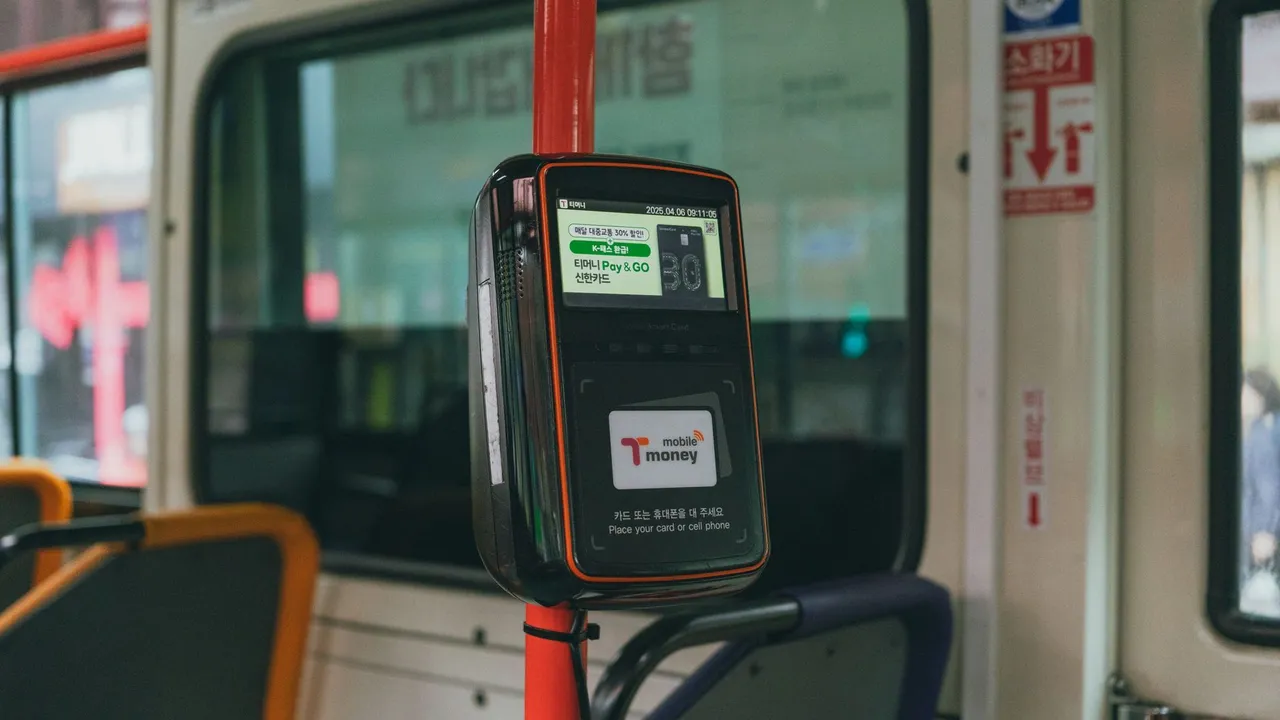
Photo by Theodore Nguyen on Pexels
T-money is a reloadable prepaid card for paying on public transport in Korea. This guide covers when a phone version, the Climate Card or another card fits better, where to top up, and how refunds and expiry work.
What T-money is and which cards compare in 2026
T-money is one of four cards the Korea Tourism Organization (KTO) recommends for visitors, alongside the EZL card, WOWPASS and the Climate Card. All four are reloadable prepaid cards that need no account.
The EZL card was formerly called the Cashbee card, so older articles that say Cashbee mean the same product.
Seoul’s October 2025 plan is to gradually convert its closed-loop transit card system to bank-card (open-loop) payment between 2025 and 2030, in the mid to long term, with the replacement of terminals on Lines 1–8 listed as step 2 (2027).
Separately, since March 17, 2026, new vending machines at 273 stations on Lines 1–8 accept internationally issued credit and debit cards such as Visa and Mastercard for Climate Card short-term passes and single-journey tickets, with an average service fee of about 3.7%.
The options compared:
| Option | Start-up cost | How you add money | Where it works |
|---|---|---|---|
| Physical T-money card | ₩3,000–₩5,000 for the card | Korean won cash at convenience stores and station machines | Public transport, taxis with readers, and shops showing the T-money logo |
| Mobile T-money / Apple Wallet | No card to buy | In the app, with Apple Pay (card brands in the phone section) | Buses and subways; the Wallet version is transit only |
| Climate Card tourist pass (1–7 days) | ₩3,000 card plus a ₩5,000–₩20,000 pass | Cash, or an overseas card at the new Seoul kiosks | Seoul subway sections and Seoul-licensed buses, with an Airport Railroad exception (see below) |
| WOWPASS | Passport needed to issue | Cash or app; the T-money balance is topped up separately | Shops by IC chip; subway, bus, taxi and convenience stores through its T-money balance |
| EZL | From ₩4,000 | Cash at convenience stores and station chargers | Bus, subway, taxi and convenience stores |
Which card fits you:
- You pay in Korean won cash, or travel beyond Seoul: buy the physical T-money card and load it with cash.
- You have an iPhone and a card in Apple Pay: use Mobile T-money instead of a plastic card (device and card requirements are in the phone section).
- You only have an overseas card and stay in Seoul: buy a Climate Card and a short-term pass at one of the new Seoul subway ticket machines.
- You want partner-merchant benefits for tourism, shopping and culture: the T-money Travel Card (₩4,000) adds them to normal T-money use.
- You have your passport and want IC-chip payment in shops: WOWPASS, with its T-money balance topped up separately.
Unlike T-money, the Climate Card is tied to Seoul. As of November 2026, the Climate Card does not cover the Sinbundang Line, the GTX, subway stations outside Seoul, express and airport buses, and buses licensed in other regions. A subway trip that starts inside the coverage area and ends outside it is not allowed, except that you may alight at Incheon Airport Terminal 1 or 2 on the Airport Railroad (boarding at those stations is not permitted).
As of November 2026, existing Climate Cards can still be recharged with 1-, 2-, 3-, 5- and 7-day short-term passes. The 30-day prepaid Climate Card could be recharged until August 31, 2026.
For a deeper look at fares and the tourist pass trade-off, see the Seoul subway guide.
What the card costs and how much to load
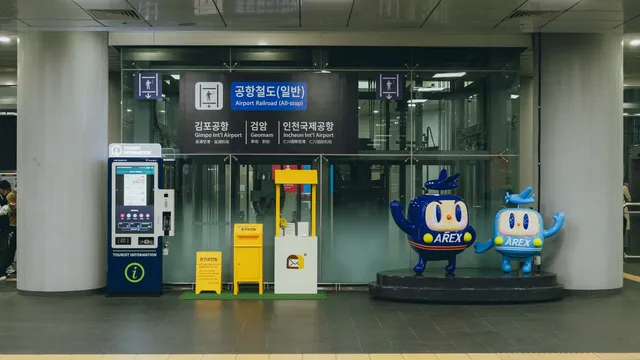
A standard T-money card costs ₩3,000 at GS25, CU, 7-Eleven and Emart24. Some designs cost more: the Line Friends hanbok (traditional Korean dress) design sold through AREX (Airport Railroad) is ₩5,000.
The price of the card is separate from the money you load, and it is not refunded later.
T-money’s official blog suggests starting with about ₩30,000–40,000 for a three-night, four-day trip, based on four to five rides a day at roughly ₩10,000 a day in Seoul.
One top-up is ₩1,000 to ₩90,000 in ₩1,000 units, and a single card can hold at most ₩500,000.
Where to buy: convenience stores, stations and airports
The card is sold at GS25, CU, 7-Eleven, Ministop, Story Way, Emart24 and 365PLUS.
The four big chains differ at the counter:
| Chain | Standard card sold | Cash refund at the counter | Extra |
|---|---|---|---|
| GS25 | GS POP NEW Black, ₩3,000 | Under ₩20,000 | Change top-up; Woori Bank cards can top up here |
| CU | CU+T-money Card Basic, ₩3,000 | ₩30,000 or less | Change top-up |
| 7-Eleven | Basic Gray, ₩3,000 | ₩20,000 or less | None listed |
| Emart24 | Basic Gray, ₩3,000 | ₩30,000 or less | None listed |
At the airport, Incheon International Airport is among the sales locations.
A visitor-specific version is also sold. The T-money Travel Card, at ₩4,000, is sold at convenience stores and at the manned bus ticket booths inside Incheon International Airport. It adds benefits at partner merchants for tourism, shopping and culture on top of normal transit use.
The T-money Travel Card Plus costs ₩6,000, is sold at convenience stores, and adds WOWPASS IC payment on top of the Travel Card features.
WOWPASS machines are installed in CU convenience stores at Incheon Airport Terminal 1 and Terminal 2, in the corridor leading to the subway at Gimpo International Airport, and in the Jeju Airport terminals. The Incheon machines handle Korean won cash only.
How to top up
| Where | Pay with | Good to know |
|---|---|---|
| Convenience-store counter | Korean won cash | Hand the card to the cashier and say the amount; it is loaded on the spot. At GS25 and CU, change from a purchase can also be loaded, down to the ₩10 unit |
| Subway station machine | Cash (some machines are cash-only) | Near the gates; English, Chinese and Japanese available |
| GS25 or a Woori Bank ATM | Woori Bank-issued Woori check or credit cards | The only card payment available for the physical card |
| Mobile T-money app (iPhone) | Apple Pay | Card brands and requirements are in the phone section below |
| New Seoul subway ticket machines | Overseas credit and debit cards | Climate Card passes and single-journey tickets only, not T-money top-ups |
Loading a card is called chungjeon (충전, top-up).
Using the card: tap on, tap off, transfers
Tap on when boarding a bus and tap off when getting off. A transfer discount needs both taps. Some Gyeonggi and Incheon routes charge by distance, so tapping off avoids overcharges.
A single Seoul bus ride does not require a tap-off on its own, unless you have already received a transfer or want one for the next vehicle (distance-based Gyeonggi and Incheon buses excepted).
The transfer discount works between subway and bus and between one bus and another (not on the same route), up to four discounts a day, when you transfer within 30 minutes (up to one hour from 9pm to 7am).
One card for several people. On a bus, one card can pay for several riders if you tell the driver how many people are boarding before you tap; the fare is charged as headcount times base fare. On the subway the terminal cannot apply several people to one card, so a multi-person transfer is not possible there.
When the balance runs low. To board, the balance must cover at least the base fare of that transport mode; otherwise top up, or pay with another card or cash.
Where it works
T-money works on subways and buses across the country, so a card bought in Seoul also works in Busan and on buses and taxis in Jeju.
In Busan, the official pass is the Hanaro Card, but T-money, Mybi and Cashbee cards also get transfer discounts, up to twice per trip if you transfer within 30 minutes. There is no transfer discount for the Airport Limousine. For Busan routes and neighborhoods, see the Busan weekend itinerary.
Taxis work when the car has a compatible card reader, so check the reader before you ride.
GS25, CU, 7-Eleven and Emart24 accept T-money, but acceptance can depend on the store or terminal, so look for the T-money mark or ask the cashier.
Checking your balance
You can check the remaining balance at convenience stores and subway facilities. Depending on the card or service, the mobile app may offer it too.
In Mobile T-money, open the T-money card section and hold the physical card to the back of the phone to read the balance and top it up.
Menu names and screens may differ by app version, so look for the card or balance section rather than a fixed path.
Phone versions: Mobile T-money and Apple Wallet
Mobile T-money lets you pay on public transport, taxis and at T-money merchants without a card. The Android app is distributed through Google Play and ONE store.
T-money launched in Apple Wallet on July 22, 2025. It is for public transit only, with no in-store or online payments.
For visitors, the iOS app is available to international users and needs no sign-up (App Store listing, November 2026). Top-ups use Apple Pay with Mastercard, American Express, UnionPay or JCB cards. It needs an iPhone XS/XR or later on iOS 17.2 or later, and a credit or debit card added to Apple Pay for top-ups.
One catch on top-ups: topping up inside the Wallet app itself needs a Hyundai Card registered to Apple Pay, while the Mobile T-money app can top up without a Hyundai Card.
The two apps split the work: you can add the card from Wallet, but child and youth fare registration and loss protection live in the Mobile T-money app.
Refunds: what you get back, where, and what it costs
Small balances can be refunded at a convenience-store counter; balances over ₩50,000 are handled at T-money Town in Seoul or at bank ATMs with a refund function (details below). At a refund-capable counter you hand over the card and tell the staff how much you want back, and you get cash in Korean won and the card back.
How much the counter will pay out depends on the chain (see the table in the buying section).
In T-money’s Korean refund table, a ₩500 fee applies at convenience-store counters and bank ATMs; there is no fee at T-money Town up to a cumulative ₩500,000 a month (1% above that).
T-money Town is on the first floor of Seoul City Tower, by Exit 10 of Seoul Station. Refunds there are up to ₩500,000 per person per day.
Bank ATMs with a T-money refund function pay out up to ₩500,000. The ATM route is a bank transfer, not a cash payout: the balance moves into an account in your own name at that bank, limited to ₩500,000 a month per resident registration number (the Korean national ID number).
Mobile T-money (phone) refunds are requested in the app and carry a ₩500 fee, or 4% above ₩20,000 (no fee when the balance is below the base fare). Mobile cards cannot be refunded at bank ATMs.
Requests of ₩50,000 or more at T-money Town need ID details (name, date of birth, contact). For ₩100,000 or more, the balance is deducted on the day of your visit and paid into a bank account after 6pm the next day (weekends and public holidays excluded), and you bring a copy of a bankbook and an ID.
The foreign-language service call center is on 120 (press 9).
Partial refunds are possible only at T-money Town and the T-money service centers in subway stations, for ₩10,000 to ₩50,000 in ₩10,000 units, and for plate-type cards only.
Apple Wallet balances can only be refunded through the Mobile T-money app, to a bank account in your own name, because the Wallet app itself has no refund function.
If the balance is small, spend it at a convenience store before you leave.
A faulty card is treated differently. If the fault shows up within two years of the first top-up, the card price is refunded too; a card damaged by the user gets only the balance back.
Does a T-money card expire?
No calendar expiry. Under T-money’s service terms (in force from November 27, 2025), prepaid payment instruments issued by the company can be used and refunded with no expiry date.
The same article sets a five-year (60-month) limitation period counted from the last top-up or last use. If you hold the physical card, though, the balance can still be used and refunded after that period. So a leftover card from a trip does not lapse on a date, and the five-year clock restarts when you top up or use it.
Other cards follow their own rules. A WOWPASS card is valid for six years from issuance and its balance for six years from the last top-up or reissue.
A Climate Card short-term pass starts the moment you charge it. A one-day pass charged on a given day is valid until the last train departure that day.
Before you go: a short checklist
- Buy the card at a convenience store or at the airport and load cash; about ₩30,000–40,000 is enough to start with on a three-night, four-day trip in Seoul.
- Tap on and tap off on buses: a transfer discount needs both taps, and some Gyeonggi and Incheon routes charge by distance, so tapping off avoids overcharges.
- Keep leftover balances small: convenience-store counter refunds have chain-specific ceilings, and a ₩500 fee applies.
- For app-based options, check the app listing for your phone and card brand before you rely on it.