Korea Cafe Culture: Study Cafes, No-Kids Zones, Ordering
Updated
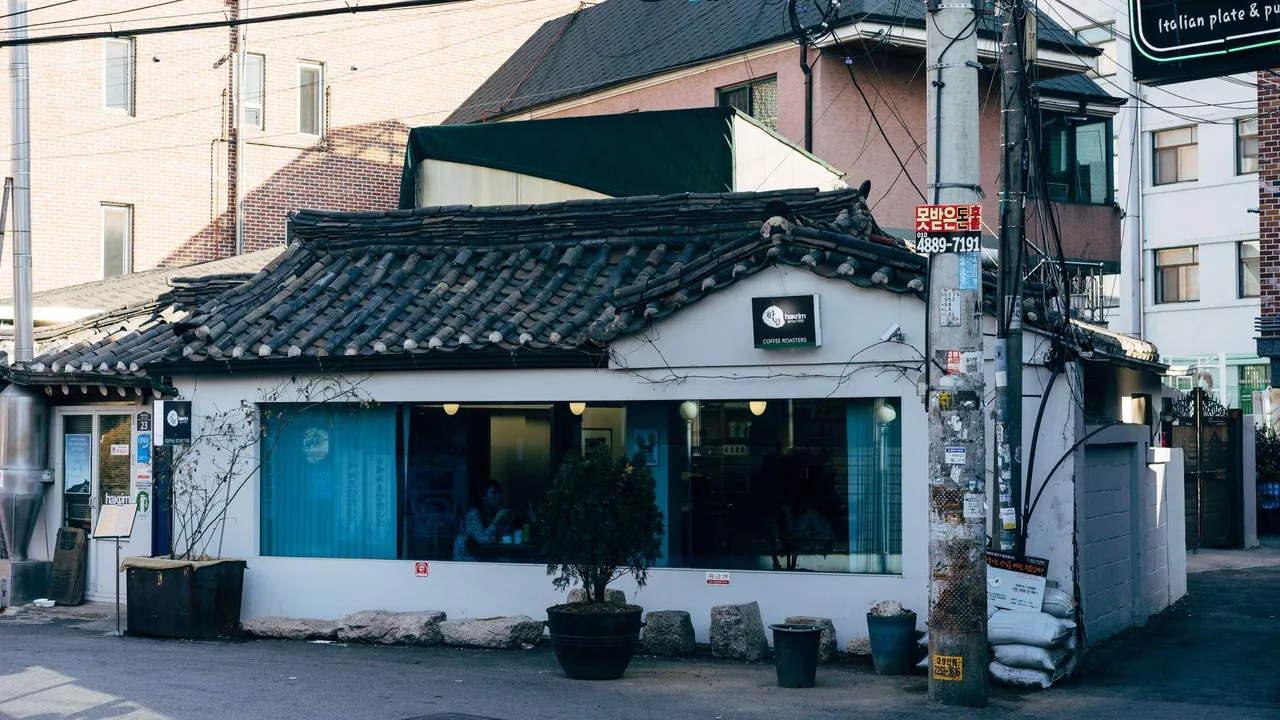
Photo by Markus Winkler on Pexels
A Korean cafe can be a coffee stop or a desk. Choose an ordinary cafe for coffee and conversation, or a paid study cafe where chatting is usually allowed only in designated areas.
Two kinds of places where Koreans sit and study
At a regular cafe people chat with friends, but at a study cafe chatting is usually allowed only in designated areas.
As of 2023, a study cafe is a paid study space that Korean students use, especially during exams when university library seats fill up.
Most study cafes are unmanned, and you pay at a kiosk for an hourly pass, a day or night pass, or a longer option.
The older partitioned study room is called a dokseosil, and the modern study cafe differs by offering varied desks, from large group tables to solo cubicles.
One study cafe described in January 2026 charged 3,000 won for two hours, 7,000 won for six hours and 10,000 won for a day pass.
At that study cafe, food and conversation were not allowed in the study area, and popular seats usually went to pass holders or early arrivals.
Korean has a word for studying or working in a cafe, cagong, and consumer science professor Lee Young-ae of Incheon National University calls it a critical segment of Korea’s growing coffeehouse industry.
Which kind of place fits what you want
| You want to | Ordinary cafe | Study cafe |
|---|---|---|
| Talk with a friend | People chat with friends at regular cafes | Chatting is usually allowed only in designated areas |
| Work for hours | Some owners say they use tactics such as a two-hour limit per beverage or deactivated outlets; no major brand officially limited stay hours or prohibited laptops as of January 2025 | As of 2023, typically multiple outlets and strong Wi-Fi; most are unmanned, with an hourly, day or night pass bought at a kiosk |
| Bring a desktop or printer | Starbucks Korea banned desktop computers, printers, power strips and large partitions in August 2025, but not laptops | As of 2023, typically have printers; some have laptop zones |
| Stay late or overnight | Starbucks Korea announced plans in May 2025 to keep at least 80 percent of its roughly 2,000 stores open until 10 p.m.; check the listing in the map app | One study cafe described in January 2026 was open all day, every day |
How long can you stay?
No major Korean coffee brand officially limited hours of stay or prohibited laptop use as of January 2025.
One chain with a written rule is Starbucks Korea: in August 2025 it banned desktop computers, printers, power strips and large partitions in its cafes.
The same notices did not ban laptops or ordinary study sessions.
Cafe owners have shared tactics online to discourage long stays, such as a two-hour time limit for a single beverage or deactivated electrical outlets.
The Korea Foodservice Industry Research Institute estimated in 2019 that a 4,100 won coffee covers only 1 hour 42 minutes of seat time before it becomes unprofitable for the owner; the figure dropped to 1 hour 31 minutes in 2024.
In my experience, staying a very long time at an ordinary cafe can be seen as bad manners. Once a while has passed after you finish your drink, it is courteous to order again or give up the seat. This is a matter of manners rather than a rule, and some people do not follow it.
No-kids zones: the sign, and whether it is a law
A “no-kids zone” is a business, such as a coffee shop, restaurant or exhibition space, that refuses entry to customers with children.
In a Ministry of Health survey of 205 businesses that identified as no-kids zones, coffee shops and bakeries made up 76.1 percent, restaurants 18 percent and animal cafes 3.9 percent.
In that survey, 68 percent of owners cited concern that they need to take full responsibility for accidents involving children, and about 35 percent feared complaints from other customers.
The National Human Rights Commission of Korea ruled in 2017 that no-kids zones were discrimination.
That ruling is not legally binding, and the government’s 2023 response was an awareness campaign, not a ban.
In August 2023 the commission again found age discrimination, this time in a department store’s restriction on children in its lounge, and recommended that the company enhance its operation policy.
In December 2023 the Health Ministry announced a campaign, run through online, YouTube and television messaging, to reduce no-kids zones and advise business owners to welcome customers accompanied by children.
Ordering: counter, kiosk and app
As of May 2025, The Coffee Bean & Tea Leaf and A Twosome Place already operated kiosks, and Starbucks Korea announced kiosks at some 10 cafes that month.
Starbucks Korea launched its mobile ordering service, Siren Order, in 2014, and about one in three customers uses it (May 2025).
In my experience, at an ordinary cafe the order of things is: use the kiosk first if there is one (ordering with staff at the counter is fine too), take a seat, and pick up your drink when the vibrating pager (jindongbel) goes off. When you finish, some cafes have a self-service return station where you put your cup and tray and throw away leftover drink and trash. If your table got messy, it is good manners to fetch napkins and wipe it down.
Disposable cups: rules for participating businesses
On 14 July 2026 the Ministry of Climate, Energy and Environment signed an agreement with large coffee chains and more than 150 independent cafes covering about 22,000 outlets, under which signatories agreed to move to reusable cups for on-site dining from September 2026.
The same agreement has signatories give takeaway customers who bring their own cup store discounts of 300 to 400 won.
Since 2018, plastic cups have been banned for dine-in customers in coffee shops.
Some earlier schemes did not last: a deposit scheme for disposable cups at cafes and fast-food chains, introduced in December 2022, was wound down after resistance from small business owners.
In November 2023 the government withdrew a ban on disposable paper cups in cafes and restaurants.
A “separate cup pricing” proposal from the environment ministry’s December 2025 consultation, which would have itemised the cost of a disposable cup on the receipt, was also withdrawn after backlash from cafe owners.
Tipping
Tipping is uncommon in Korea, and the country’s tip-free culture shows no sign of change as of August 2025.
Under the “final price display” system, menu prices must include taxes and service charges; the system was introduced in a 2013 revision of the Food Sanitation Act.
Some restaurants and cafes have tested tip jars or kiosk add-ons, and a bakery, London Bagel Museum, removed its tip jar after complaints (August 2025).
What coffee costs
In a Korea Consumer Agency survey announced in November 2024 (2024 prices), 25 franchise coffee stores charged an average of 3,001 won for an Americano, against 2,635 won that consumers called appropriate.
For the same size, Americano was 4,500 won at Starbucks, Pascucci, Angel-in-us, A Twosome Place, Hollys, Droptop and Caffe Bene, and 5,000 won at The Coffee Bean & Tea Leaf.
Six companies, including Mega MGC Coffee, Compose Coffee and Paik’s Coffee, charged 1,500 won for the same drink, while Paul Bassett charged 4,700 won.
In that survey the cheapest Americano, at Cafe Bombom, cost 1,300 won, and the most expensive, at The Coffee Bean & Tea Leaf, cost 5,000 won.
Opening hours and late-night cafes
In May 2025 Starbucks Korea announced plans to keep at least 80 percent of its roughly 2,000 stores open until 10 p.m., a return to pre-pandemic hours.
Dessert cafes open until 2 a.m. count among Korea’s nightlife options as of June 2026.
One study cafe described in January 2026 was open all day, every day.
Check each cafe’s listing in the map app before you go. Our Naver Map and KakaoMap guide shows how to search in English.
Wi-Fi and outlets
By 2018, Starbucks Korea was paying more attention to study-and-work customers, unlike many other cafes at the time, which cut off their internet and blocked power outlets.
One Bundang coffeehouse fitted the desks and tables in its post-renovation layout with a power outlet each.
As of 2023, study cafes typically have multiple outlets and strong Wi-Fi plus printers, and some have laptop zones.
As of March 2026, Seoul operates more than 35,000 public Wi-Fi routers and plans to add high-speed Wi-Fi in Hangang Park, Seongsu-dong and Myeongdong.
Themed cafes and cafe-hopping
Seongsu-dong in Seoul was once a dense industrial area of shoe, printing and auto-repair-supply factories, and abandoned factories and warehouses became unique shops, workshops and culture complexes.
Onion Seongsu is a cafe in Seongsu-dong that occupies a 1970s-era factory space that keeps the building’s original look.
Korea had 100,729 coffee shops in 2022 (Statistics Korea), twice the number of convenience stores.
Our Seoul 3-day itinerary includes Seongsu-dong and Yeonnam-dong, and the Busan weekend itinerary covers sea-view cafes near Gwangalli Beach.
Quick rules to remember
- Pick the cafe for the purpose: ordinary for coffee and talk, study cafe where chatting is usually allowed only in designated areas.
- A no-kids sign means the place refuses entry to customers with children.
- Tipping is uncommon in Korea.
- Seat-time and laptop rules vary; read any notice at the door or counter.
- Check opening hours on the map app before you go.