3 Days in Seoul: A Neighborhood-by-Neighborhood Route
Updated
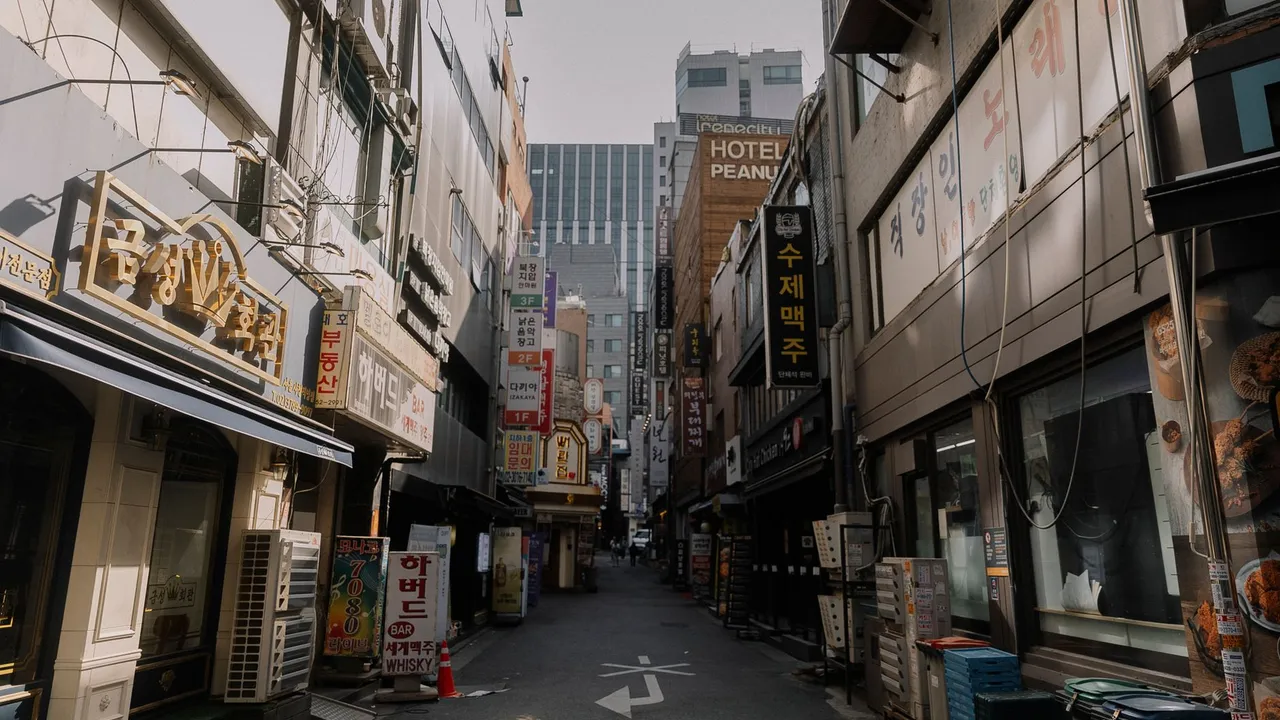
Photo by Elina Volkova on Pexels
This route gives each day one area: Jongno with its palaces and market on Day 1, Seongsu-dong (dong means neighborhood) with Seoul Forest on Day 2, and Mangwon, Yeonnam-dong and Hongdae (the area around Hongik University) on Day 3.
Hours and prices were last checked in autumn 2026. They change, so treat them as a starting point and check the stop’s own official page before you leave.
Is three days in Seoul enough?
Three days covers three of the five areas in the city’s official first-timer course: a full day each in Jongno, Seongsu-dong with Seoul Forest, and Hongdae to Mangwon Market.
That course runs four nights and five days, with one day each for Dongdaemun Design Plaza, Hongik University and Mangwon Market, Jongno and Namsan, Seongsu-dong and Jamsil, and the War Memorial of Korea and Itaewon. Dongdaemun Design Plaza, the Jamsil stretch and the Itaewon day are the parts this route leaves out.
The last section shows how to add those days back or drop one of the three.
How the route is built
Each day has one home area, and most stops in it come with a station exit so you can navigate by exit number.
In my own habits, a meeting point is a station and an exit number, not a street address.
In my own daily use, Naver Map is effectively the only navigation app I rely on.
Our Naver Map and KakaoMap guide covers switching either app to English, our Seoul subway guide covers fares, transfers and last trains, and our T-money card guide covers buying and loading a transit card, so this post does not repeat them.
Route at a glance:
| Day | Area | Getting around | Book ahead or check the closed day |
|---|---|---|---|
| 1 | Jongno: Gyeongbokgung, Bukchon, Insadong, Gwangjang Market | Lines 1, 3 and 5; exits at Gwanghwamun, Gyeongbokgung, Anguk, Jongno 3-ga and Jongno 5-ga stations | Gyeongbokgung closed Tuesdays (Changdeokgung, closed Mondays, is the swap); the Secret Garden is guided tours only; Gwangjang’s main market closed Sundays |
| 2 | Seongsu-dong and Seoul Forest | Line 2 and the Suin-Bundang Line; Seongsu Station Exit 3, Seoul Forest Station Exits 3 or 4 | AMORE Seongsu and the Seoul Forest gardens closed Mondays; the Butterfly Garden opens May to October only |
| 3 | Mangwon, Yeonnam-dong, Hongdae | Line 6 and Line 2; the Mapo Shuttle Train Bus runs Thursday to Sunday and is closed on Seollal (Lunar New Year) and Chuseok (Korean harvest holiday) | Mangwon Market hours vary by store; Hongdae has buskers and dance performances |
Check the day of the week first
Several stops close on a fixed weekday, and the closing days differ by place.
- Gyeongbokgung Palace is closed every Tuesday. If a Tuesday is a public holiday, the palace opens that day and the closure moves to the next non-holiday day.
- Changdeokgung Palace is closed on Mondays.
- At Gwangjang Market, the main market and the Guie Shopping Street are shut on Sundays, while the Food Alley is open year round.
- At Seoul Forest, the Insect and Plant Garden is closed on Mondays, and the Butterfly Garden is closed every Monday and open only from May to October.
Day 1: Gyeongbokgung to Gwangjang Market in Jongno
Gyeongbokgung Palace
Gyeongbokgung Palace, built in 1395, was the main palace of the Joseon Dynasty.
It opens at 09:00, and the closing time changes with the season (see the seasons section below), with last entry one hour before closing.
You can enter free if you wear a complete hanbok (traditional Korean dress).
Under the rule of the Royal Palaces and Tombs Center, both traditional and modernized hanbok qualify, but you need an upper garment (jeogori) and a lower garment, and a durumagi (overcoat) on its own does not count.
English-language guided tours run daily at 11:00, 13:30 and 15:30, except on Tuesdays.
Gwanghwamun Station (Line 5) Exit 2 is about 471 m from the palace, and Gyeongbokgung Station (Line 3) Exit 5 is about 492 m.
Bukchon Hanok Village: a residential neighborhood
Bukchon Hanok Village was not created for tourists and is a residential village inhabited by Seoulites.
It is designated a Special Management Area (Red Zone), with visiting hours of 10:00 to 17:00 and entry to restricted areas prohibited from 17:00 to 10:00 the next day.
Visitors are asked to keep noise to a minimum, to avoid microphones and loudspeakers, to keep groups to a maximum of 10, and not to photograph house interiors even if the doors are open.
Anguk Station (Line 3) Exit 3 is 516 m away.
Insadong
Insadong has wooden tea houses, boutique galleries and street vendors selling traditional snacks.
Ssamziegil, a complex there, has over 70 shops including craft shops, galleries, tea houses and restaurants.
The streets are traffic-free on Sundays.
Jongno 3-ga Station (Lines 1, 3 and 5) Exit 5 is 438 m away.
Gwangjang Market for the evening
Gwangjang Market’s Food Alley is open daily from 09:00 to 23:00, while the main market runs 09:00 to 18:00.
Specialties include bindaetteok (mung bean pancake), mayak gimbap, tteokbokki (stir-fried rice cakes) and eomuk (fish cake).
Jongno 5-ga Station (Line 1) Exit 8 is 62 m from the market.
If it is a Tuesday: Changdeokgung Palace and the Secret Garden
Changdeokgung Palace is the second UNESCO World Heritage Site in Seoul.
The Secret Garden (Huwon) can be entered only on a guided tour, and its ticket does not include palace admission.
English tours run at 10:30, 11:30, 14:30 and 15:30 from March to November, and three times a day from December to February.
Each session is capped at 100 people per language, split between 50 online reservations and 50 on-site tickets.
Anguk Station (Line 3) Exit 3 is 389 m from the palace.
Day 2: Seongsu-dong and Seoul Forest
Seongsu-dong was once known primarily for factories and small workshops, and it was one of Korea’s most important handmade shoe manufacturing districts.
Former factory buildings now house cafés, design studios and pop-up stores, and weathered brick walls and warehouse architecture remain visible.
Yeonmujang-gil has street art, industrial architecture, creative storefronts and seasonal pop-up stores, is open 24 hours and is 533 m from Seongsu Station (Line 2) Exit 3.
In my daily rides, Lines 2 and 9 are crowded pretty much at any hour, not only at commute time.
CaféCité, a café with a greenhouse-style glass roof, is open daily from 10:00 to 22:00, and it is 312 m from the same exit.
AMORE Seongsu, a K-beauty experience space, is open Tuesday to Sunday and closed on Mondays.
Seoul Forest
Seoul Forest is a large urban park that opened in 2005.
The park is open 24 hours a day.
Seoul Forest Station (Suin-Bundang Line) Exits 3 or 4 are about 242 m away, and Ttukseom Station (Line 2) Exit 8 is about 537 m.
Its fifth theme area, the Hangang Riverside Park Project, has the Seoul Forest Quay and bike paths.
Day 3: Mangwon, Yeonnam-dong and Hongdae
The five-day course puts Hongdae, Yeonnam-dong, Gyeongui Line Book Street, Mangwon-dong and Mangwon Market in one day.
This plan takes the market and the riverside in daylight, then Yeonnam-dong and Hongdae toward evening.
Mangwon Market and Mangwon Hangang Park
Residents of all ages shop at Mangwon Market for fresh produce, side dishes and snacks, and the market has held a special place in the neighborhood for more than 40 years.
The market is open daily from 10:00 to 21:00, though hours vary by store.
Mangwon Station (Line 6) Exit 2 is 351 m away.
Mangwon Hangang Park is about 22 minutes on foot from Mangwon Station Exit 2, and you can picnic by the river or rent a Ttareungyi (Seoul’s public bike) at the park entrance.
How people use the Hangang parks
The Hangang River (the Han River) is a representative picnic spot in Seoul.
Rental shops there offer tents, mats, tables and speakers, and convenience stores in the parks sell picnic essentials.
Chimaek (chicken and beer) is a favorite Korean picnic combo, and chicken franchises operate in the parks for quick pickup. Instant ramyeon is another favorite, cooked in the park on a special ramyeon cooking machine.
Tent rules as of March 2025: small sunshade tents of up to 2 m by 2 m are allowed in 14 designated areas, with setup hours of 09:00 to 19:00 in April–May and September–October and 09:00 to 20:00 in June–August.
As of May 2026, designated delivery zones let you order food to the park; popular ones are at Yeouido and Ttukseom.
Dinner before Hongdae
Dak gangjeong (deep-fried and braised chicken) at Mangwon Market makes a hearty meal. Some shops offer seating, but most require you to stand by the stall to eat.
If you would rather have Korean barbecue, our beginner’s guide to Korean BBQ explains how ordering by the serving and grilling at the table work.
Yeonnam-dong and Hongdae toward evening
Gyeongui Line Forest Park is a 6.3 km park that stretches from Gajwa Station in Yeonnam-dong, and its longest section, Yeontral Park in Yeonnam-dong, is a popular gathering spot.
Hongik University Station (Line 2, Gyeongui-Jungang Line and AREX, the Airport Railroad) Exit 3 is 447 m from the park.
Hongdae is a neighborhood known for its youthful ambience, where the streets are filled with buskers and dance performances.
The Mapo Shuttle Train Bus links Hongdae Walking Street, Gyeongui Line Forest Park and Mangwon Hangang Park, running Thursday to Sunday for KRW 5,500 for adults. It is closed on Seollal (Lunar New Year) and Chuseok (Korean harvest holiday).
The first bus leaves the Seoul World Cup Stadium end at 10:00 and the last at 17:20.
Published prices for these stops
These are the published prices for the stops in this route and the extensions further down, as checked in autumn 2026.
- Gyeongbokgung Palace costs KRW 3,000 for foreign adults aged 19 to 64.
- Changdeokgung Palace costs KRW 3,000 for foreigners aged 19 to 64, and the Secret Garden tour costs KRW 5,000 for adults on top of that.
- Seoul Forest is free to enter.
- The Namsan Cable Car costs KRW 15,000 round trip for adults.
- The subway base fare with a transit card is KRW 1,550 for adults, after a fare change on June 28, 2025.
- The base range is 10 km, with an additional KRW 100 per 5 km once a trip’s total distance goes past it (our Seoul subway guide covers fares in full).
What changes with the seasons
Winter (November to February)
Temperatures sometimes drop to minus 15 degrees Celsius, heavy snow periodically falls on the city, and the Hangang River occasionally freezes solid.
Gyeongbokgung Palace closes at 17:00 in November, December, January and February.
Changdeokgung Palace closes at 17:30 from November to January, with last entry at 16:30.
At Seoul Forest, the Insect and Plant Garden shortens to 10:00 to 16:00 (last admission 15:30) from November to February.
Spring (March to May)
Gyeongbokgung Palace closes at 18:00 from March to May.
Daily mean temperatures run from 5.7 degrees Celsius in March to 17.8 degrees Celsius in May, and the air is particularly dry.
Sand storms from the Gobi Desert region of China and Mongolia sometimes make an appearance.
Summer (June to August)
The rainy season, jangma, begins in mid-June and continues for about a month.
Gyeongbokgung Palace stays open until 18:30 from June to August.
Autumn (September to November)
Gyeongbokgung Palace closes at 18:00 in September and October.
In fall, the metasequoia and ginkgo trees in Seoul Forest change their green tones for golden ones.
Our autumn foliage guide covers timing and the in-city foliage spots.
Two days, four or five days, or kids
With two days
Day 1 is Jongno, Day 2 is Seongsu-dong with Seoul Forest, and Day 3 is Mangwon, Yeonnam-dong and Hongdae, so a two-day trip uses two of those three days.
With four or five days
Add a day for Dongdaemun Design Plaza, “a complex cultural space where conventions, design exhibitions, performances, and fashion shows are held,” and another for the War Memorial of Korea, Itaewon, Hannam-dong and Gyeongnidan-gil. Day 2 can run on to Lotte World, Seoul Sky, Seokchon Lake and Jamsil Hangang Park, and Day 1 can take in N Seoul Tower and Cheonggyecheon Stream.
The Namsan Cable Car runs daily from 10:00 to 23:00 (last admission 22:30 for round trips and 22:45 for one-way) and is 571 m from Myeongdong Station (Line 4) Exit 4.
With kids
The Gyeongbokgung family walking tour takes 1.5 hours and is conducted at an elementary school level.
Reservations for children without an accompanying adult or guardian are cancelled on site, and reservations must be made at least three days before the tour date. All reservations are cancelled when a weather warning is issued (heatwave, typhoon, heavy rain, fine dust).
Seoul Forest has a forest playground, a family yard with a large lawn and an environmental playground.
Wheelchair and stroller rental there is free for up to two hours with ID.
The ground fountain operates from May through October, with six shows starting at noon and running hourly through 17:00.