Vegetarian, Vegan and Halal Food in Korea: What to Check
Updated
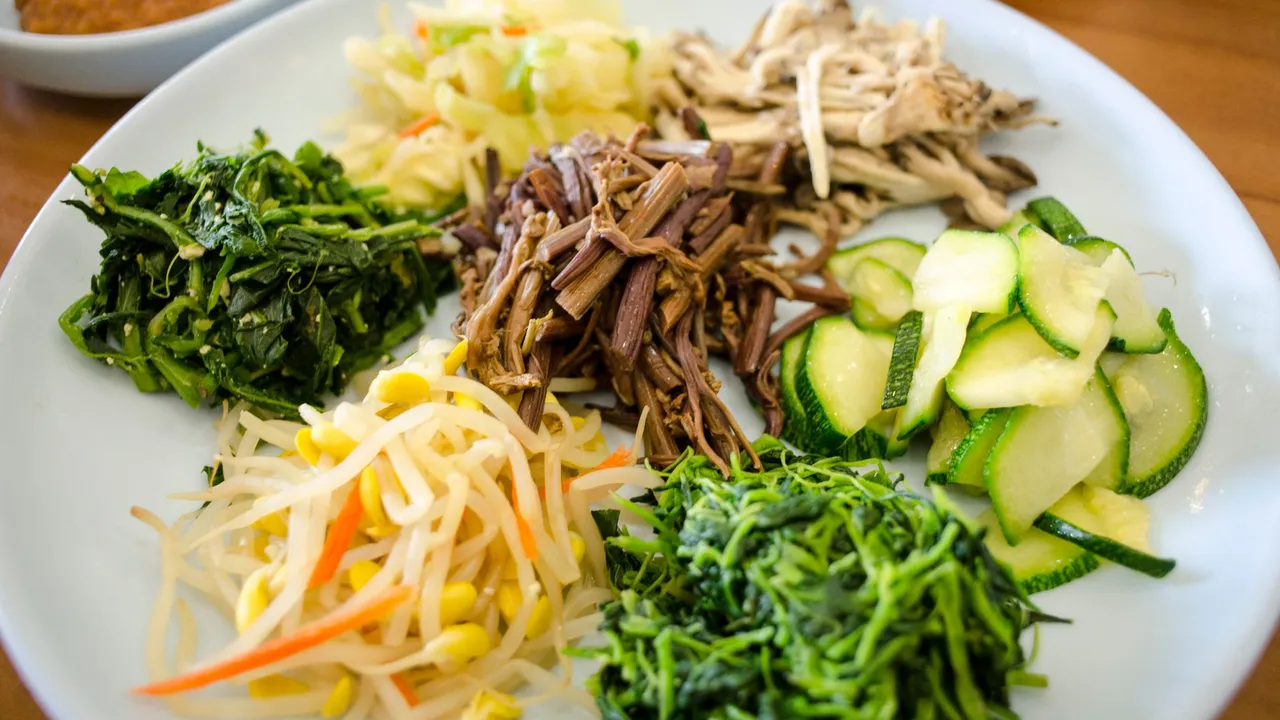
Photo by makafood on Pexels
Many Korean restaurants have no separate vegetarian menu, so name every ingredient you avoid. For halal, older restaurant labels from the Korea Tourism Organization (KTO) are a dated scheme, so use the question cards and confirm with the restaurant.
Vegetarian and vegan: broth, kimchi and common dishes
Tell the server your diet before you order and spell out what to leave out, since a vegetarian menu may not exist. Prepare Korean phrases such as “I am a vegetarian” or “I cannot eat meat, eggs, and seafood” in a translation app in advance. As of the October 2023 update of VisitKorea (KTO’s tourism site), vegetarians continue to increase in number every year in Korea and some restaurants are adding vegetarian items to their menus.
Kimchi is not automatically vegetarian. Korean food is often prepared with meat and fish broth, and kimchi seasoning most often contains salted seafood, fish sauce, meat broth or similar flavoring ingredients, and some regional recipes call for abalone, cutlassfish or pork.
VisitKorea’s dish-by-dish points, as of its October 2023 update:
| Dish | What to check |
|---|---|
| Bibimbap (rice mixed with vegetables) | Most bibimbap menus include meat and eggs as toppings; ask to exclude them |
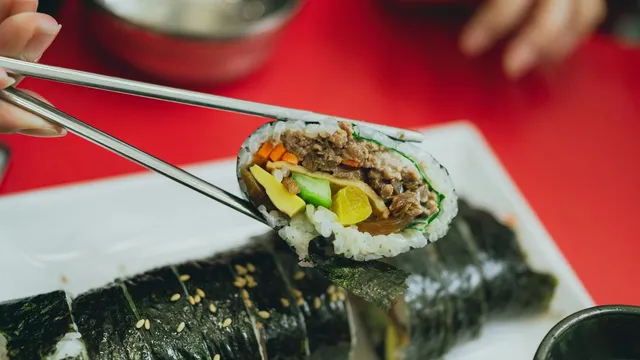
| Gimbap (seaweed rice rolls) | Tuna and cheese gimbap name their special ingredient; basic vegetable gimbap (yachae gimbap) mostly consists of carrot, burdock root, spinach and seasoned radish, yet depending on the restaurant it may contain ham, eggs and crab-flavored meat |
| Kongguksu (noodles in cold soybean broth) | Eggs may be placed on top as a garnish |
| Jeon (Korean-style pancakes) | Vegetable, potato, green onion and mushroom versions exist; some recipes add eggs to the batter |
| Tofu dishes | Soft tofu is served as is with soy sauce or pan-fried in slices; soft tofu jjigae (stew) and dubu jorim (braised tofu) mostly add salted shrimp |
Temple food is food for practicing Buddhist monks that does not use any meat at all (VisitKorea, October 2023). It can now be found outside actual temples.
For packaged products, look for a certified vegan logo. Several vegan certification institutions worldwide issue logos showing that a product contains no animal products or byproducts and has not been tested on animals. Institutions include Vegan Standard Certification International Institution, Korea Agency of Vegan Certification and Services, Vegan Society, V-Label International, EVE Vegan and Cruelty Free International.
Halal: older KTO labels, counts and what is dated
An older KTO English page (undated, and citing a 2018 event) described four categories for Muslim-friendly restaurants. Per a Pressian column, KTO’s program sorting restaurants by Muslim-friendliness ran only through 2021.
| Label on the older KTO page | Definition on that page |
|---|---|
| Halal Certified | Restaurant is certified by an accredited halal certification agency such as Korea Muslim Federation (KMF) |
| Self Certified | All food are halal; restaurant is certified as halal by Muslim restaurant owners themselves |
| Muslim Friendly | Some halal dishes are provided; alcohol may be sold |
| Pork-free | Restaurant does not offer halal menu, but does not use pork; alcohol may be sold |
That page used pictograms for a Muslim owner or chef, a halal menu, a reservation required for the halal menu, alcohol-free and pork-free. Hotel restaurants and buffets categorized as Muslim-friendly could serve dishes that contain pork.
The current VisitKorea Muslim-friendly Travel section has separate Restaurants and Prayer Rooms directories, with maps, and a Muslim Visitor’s FAQ. The FAQ is a set of yes/no question cards in Korean, English and Arabic. Its restaurant cards ask whether a dish contains pork or pork-based ingredients, whether it contains alcohol including cooking wine such as mirin, whether there are dishes without fermented soy sauce, whether alcoholic drinks are served, and whether halal and non-halal items use separate utensils and cookware.
Counts are second-hand and dated. Per a Pressian column (4 November 2026) citing KTO: as of early 2024, KTO guided 278 restaurants providing halal food nationwide and 122 in Seoul, 29 of them in Yongsan-gu (the district that includes Itaewon); the column counts 18 halal restaurants in Seoul serving Korean food; KTO decided from 2024 not to provide the sorting information directly; and the column cites a reporting result that found more than 20 closed restaurants among those remaining on the older list.
Visit Seoul (Seoul’s official tourism site, page edited 21 August 2026) presents self-certified and Muslim-friendly restaurants, including officially certified halal restaurants, and 10 main prayer rooms are available in Seoul, in locations such as airports, major tourist attractions, large hospitals and the Seoul Central Mosque in Itaewon.
In March 2025 the Seoul city government announced it was looking for “Salam Seoul” restaurants, which the Korea JoongAng Daily defined as halal-certified establishments serving only ingredients prepared and sourced under Islamic dietary laws, including restrictions on pork. The city also announced that previously designated halal restaurants would be reviewed for compliance, change of business category or closure, and that a booklet of these restaurants would be published.
What to check before you order
Vegetarian or vegan
- Tell the server your diet before ordering and list each ingredient to leave out (for example meat, eggs and seafood).
- Ask what the broth or soup base is; Korean food is often prepared with meat and fish broth.
- Ask about kimchi seasoning: salted seafood, fish sauce or meat broth are common in it.
- For named dishes, check the table above: bibimbap toppings, gimbap fillings, egg garnishes, egg in jeon batter and salted shrimp in tofu stews.
- For packaged goods, look for a certified vegan logo from one of the institutions named above.
- For temple food, name any ingredient you avoid, as at any restaurant.
Halal
- A Pressian column cites reporting that found closed restaurants on KTO’s older list, so confirm with the restaurant before you go.
- In a hotel restaurant or buffet labelled Muslim-friendly, ask about pork, because such venues could serve dishes that contain it.
- Use the KTO question cards: pork-based ingredients, alcohol including mirin, fermented soy sauce, whether alcohol is served, and separate utensils and cookware.
- For prayer rooms, use the KTO Prayer Rooms directory or Visit Seoul’s page, where 10 main prayer rooms are available in Seoul.
Marks and directories: who issues them
| Mark or directory | What it is | Issuer | Date shown by source |
|---|---|---|---|
| Certified vegan logos | Product logos from several institutions, six named on VisitKorea | e.g. Korea Agency of Vegan Certification and Services, Vegan Society | VisitKorea page updated October 2023 |
| Older KTO Muslim-friendly labels | Four labels: Halal Certified, Self Certified, Muslim Friendly, Pork-free | Korea Tourism Organization (KTO) | Page undated, cites 2018; sorting program ran through 2021 (Pressian) |
| VisitKorea Muslim-friendly Travel | Restaurants and prayer rooms directories with maps; Muslim Visitor’s FAQ question cards | KTO | Page shows no date |
| Visit Seoul “If you are a Muslim traveler” | Self-certified and Muslim-friendly restaurants, officially certified halal restaurants, 10 main prayer rooms | Visit Seoul (Seoul’s official tourism site) | Edited 21 August 2026 |
| Salam Seoul restaurants | Halal-certified establishments the Seoul city government said it was selecting, with a booklet planned | Seoul city government | March 2025 |
More help
The 1330 Korea Travel Helpline (+82-2-1330) answers in Korean, English, Japanese, Chinese, Russian, Vietnamese, Thai and Malay. Grill-table meals are covered in the Korean BBQ guide. Menus and page layouts on these sites may differ by version, so check the current page before relying on a label or count.