Myeongdong Street Food: The Buldak Omelette vs Home Cooking
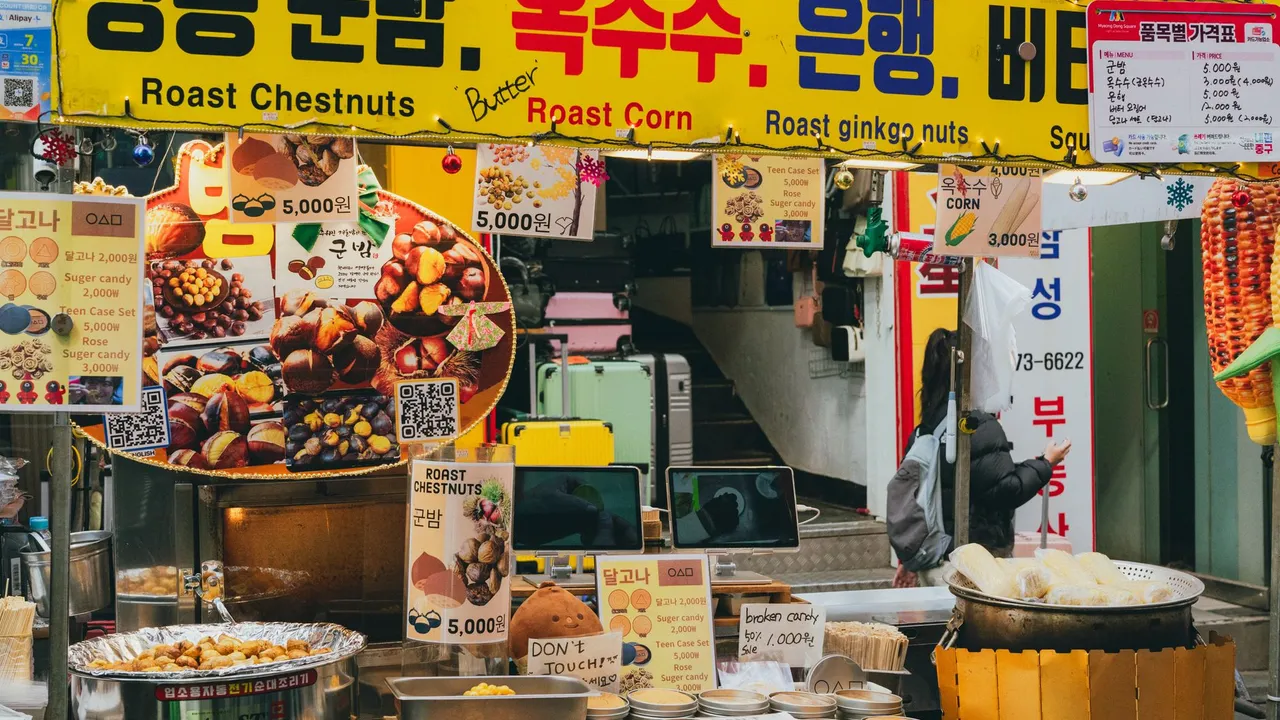
Photo by Theodore Nguyen on Pexels
As a Korean living here, I do not think Koreans would buy the Buldak omelette sold in Myeongdong. This post sets dated Myeongdong numbers beside the prices of the home alternative.
What the Buldak omelette is, and how it spread
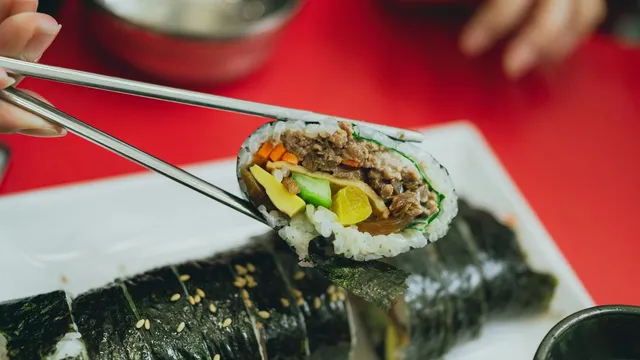
A Buldak omelette recipe went viral on overseas social media as a Myeongdong street food. Korean press picked this up in autumn 2026 when the convenience-store chain GS25 turned the recipe into a kimbap (seaweed rice roll).
GS25’s figures, October 2026: the Buldak Cheese Omelet Kimbap launched on 16 September 2026 at 3,500 won. It is rice seasoned with Samyang’s Buldak sauce, topped with cheese, sausage and omelet, and more than 500,000 had sold within a month.
As a Korean living here, I know the dish as one introduced to Koreans later. In my experience it costs as much as 10,000 won at Myeongdong.
Myeongdong in numbers
The numbers below are about Myeongdong’s visitors and shoppers; none is specific to street food.
Dated figures for 2025 and 2026:
- 14,275,126 foreign visitors came to Myeongdong in 2025 (Korea Tourism Data Lab, via Money Today, 26 January 2026).
- Foreign card spending in Myeongdong in 2025: 781.9 billion won (Korea Tourism Organization data, via Newstof, 20 March 2026). The figure counts only payments on cards issued overseas, so cash is not included.
- Foreign share of sales, single companies only, not Myeongdong as a whole: Olive Young’s Myeongdong sales rose from the 80% range in 2023 to about 95% in 2026 (company figure, Financial News, 10 May 2026). Musinsa Standard’s Myeongdong store was about 55% in 2025 (Money Today, 26 January 2026).
As a Korean living here, what I see among myself and the young Koreans around me is that we do not go to Myeongdong for Myeongdong’s sake. We go because we work there or need something nearby, such as a department store, and the Nike store in Myeongdong gives people nearby a reason to go. We do not go for the foreigner-oriented shops or the street food, and we do not eat street food while we are there. Compared with when I was a child, Myeongdong has filled up with shops aimed at foreigners. Some long-standing good restaurants remain, but it is no longer a place we consider for a day out.
In my view, Koreans do not eat at Myeongdong’s shops or street-food stalls, yet foreigners pay high prices for that food as if it were distinctively Korean. I do not think that is really experiencing Korea, and I think Koreans do not even know what is sold there. This is my own observation, not a statistic.
What Koreans eat instead
In my view, a Korean who wants that flavour would buy one pack of Buldak Bokkeum-myeon (불닭볶음면, spicy stir-fried instant noodles), cook it at home and put one fried egg on top.
Prices for the two ingredients come from different years:
- In 2022, Samyang Foods raised the hypermarket price of one Buldak Bokkeum-myeon pack from 936 to 1,020 won, effective 7 November 2022. Actual prices differ by sales channel (Edaily, 21 October 2022).
- As of 23 November 2026, the average retail price of 30 eggs was 7,068 won, 6.3% above a year earlier (Korea Agro-Fisheries & Food Trade Corporation, aT, via Yonhap and Financial News, 25 November 2026). That is about 236 won per egg.
Three ways to get a Buldak-flavoured meal: prices
| Version | Where it is made or sold | What it is | Price |
|---|---|---|---|
| Street-stall Buldak omelette | Myeongdong (street food) | The omelette that went viral abroad | 10,000 won (author’s observation, no press price) |
| Buldak Cheese Omelet Kimbap | GS25 convenience stores | Rice with Buldak sauce, cheese, sausage and omelet, launched 16 September 2026 | 3,500 won |
| Pack and egg at home | Home kitchen | One Buldak Bokkeum-myeon pack, boiled, with a fried egg on top (author’s observation) | Pack 1,020 won (hypermarket, from November 2022); 30 eggs 7,068 won on average (23 November 2026) |
The noodle price is from 2022 and the egg price from 2026, so the two are not added together here.
In short
A street-stall omelette, a GS25 kimbap and a home pack with an egg come from different places at different prices; the table above gives each price with its source or date where one exists. For the wider district, see the Seoul 3-day itinerary, and for how GS25 and other convenience stores work, the Korean convenience store guide.