Jjimjilbang Etiquette: First-Timer's Guide to Korean Saunas
Updated
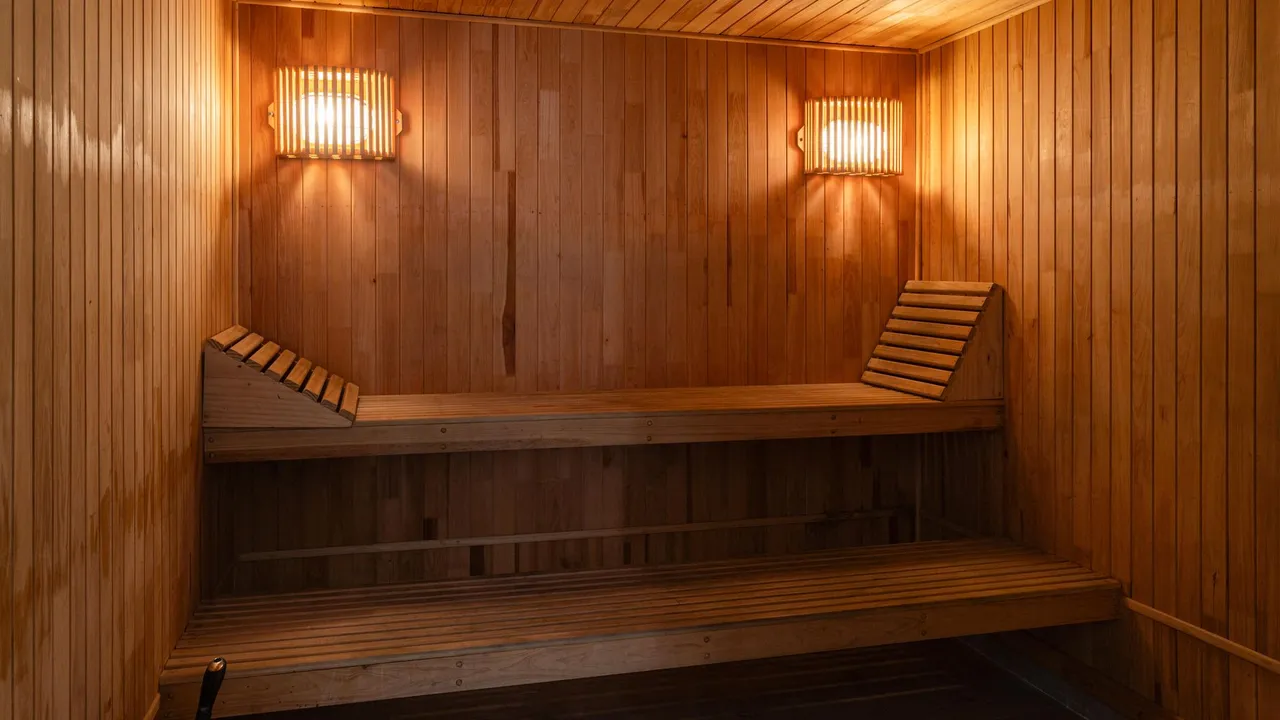
Photo by Gustavo Galeano Maz on Pexels
The question first-timers ask most is not about food or the subway — it is “do I really have to be naked?”, with “is it actually clean?” a close second. Those are genuinely the two things visiting friends ask me first. The honest answer to the first: only in one part of the building, only in front of your own gender, and after about ten minutes you will stop noticing. To the second: yes — the etiquette is that everyone showers before getting in, and I’ve told friends the water gets changed and cleaned on a regular basis (more on that below). This guide walks a nervous first-timer through a jjimjilbang (Korean sauna complex) zone by zone: which areas are naked and which are not, whether the baths are actually clean, what to do about tattoos, what it costs by day and by night, whether you can sleep there instead of a hotel, the egg-and-sikhye ritual, the sheep-head towel, and which venues make sense for a foreigner — including two at Incheon Airport.
What is a jjimjilbang, and how is it different from a “Korean spa”?
Three words get mixed up constantly, so let’s separate them first.
A jjimjilbang (찜질방, literally “poultice room”) is the big one: a bathhouse that grew popular in the 1990s and stacks a lot more on top of the baths. The bathing floors are separated by gender and hold hot tubs, showers, traditional kiln saunas, and massage tables; elsewhere in the building there are unisex areas with a snack bar, ondol (heated floor) for lounging and sleeping, TVs, ice rooms, heated salt rooms, and sleeping quarters with mats or bunks. Many are open at all hours, and some let you sleep there overnight.
A mogyoktang (목욕탕, public bathhouse) is the older, smaller neighborhood institution: lockers, showers, hot tubs, steam rooms, massage areas, sometimes a barbershop — usually only a bathhouse, split into a men’s side and a women’s side, and not open 24 hours. Koreans also use the word “sauna” loosely for these neighborhood bathhouses, which combine hot and cold baths with dry and steam saunas. They are a shrinking species: by the Ministry of Health and Welfare’s count, public bathhouses nationwide fell from a peak of 10,098 in 2001 to 5,668 in 2025.
A “Korean spa” abroad — the Wi Spa or Spa Castle type of place in the US — is a jjimjilbang export. Spa Castle in New York describes itself as “known in Korea as jjimjilbang” and opened in 2006; Wi Spa in Los Angeles runs 24/7 with a women’s floor, a men’s floor, and a family-friendly jimjilbang floor. The layout is the same idea. What differs is house rules on clothing in the shared areas, which are set venue by venue: Wi Spa follows the Korean model — its FAQ asks you to wear the provided shirt and shorts in every co-ed facility and bans bathing suits on the gender-separated spa floors — whereas Spa Castle New York requires a bathing suit in its pools and nudity only in the gender-separated bathhouse areas. In Korea the shared zone means the provided uniform, not swimwear.
| Jjimjilbang | Mogyoktang (neighborhood bathhouse) | “Korean spa” overseas | |
|---|---|---|---|
| What it is | Baths + unisex heated lounge, kiln saunas, food, sleeping | Baths only (plus sauna/steam room) | Jjimjilbang copy outside Korea |
| Gender-separated naked zone | Yes | Yes — the whole place | Yes (bath floors) |
| Mixed zone | Yes, in a provided uniform | No | Yes; clothing rules vary by venue |
| Hours | Many open at all hours | Not 24 h | Varies (Wi Spa: 24/7) |
| Sleep there | Often possible | No | Wi Spa: yes, with an overnight fee after 4 am; Spa Castle NY: no — it closes at 9:30 pm |
| Typical price | See pricing section below | Roughly ₩7,750–11,000 as of Feb 2026 (the spread of provincial averages; one Chuncheon bathhouse’s hike from ₩9,000 to ₩10,000 made the local paper) | Wi Spa: US$40 day pass; Spa Castle NY: US$85 Mon–Thu / US$110 Fri–Sun, plus a 20% service charge |
For context: Korea’s first modern public bathhouse opened in Pyongyang in 1924 under Japanese influence, and the traditional sweat kiln — hanjeungmak (한증막), a stone dome heated with pine wood — is first mentioned in the Annals of King Sejong in the 15th century. Since 1429 those sweat rooms have been built separately for men and women. The jjimjilbang is the modern mash-up of both traditions.
Where do you have to be naked? A zone-by-zone walkthrough
This is the part that worries people, so here is the exact sequence.
1. Lobby and shoe lockers (clothed). You pay, you get a key, and shoes go into a shoe locker at the entrance — that key is then exchanged for a clothes-locker key inside. Shoes never go past the lobby.
2. Changing room (your gender only). Doors are labelled men / women. Here you undress fully and stash everything in your locker. With the locker key you receive the jjimjilbang uniform — usually a T-shirt and shorts, color-coded by gender — and towels. Don’t put the uniform on yet if you are heading into the baths.
3. The baths (your gender only, naked). Hot tubs, a cold tub, showers, and the wet saunas. Nobody wears anything. Nobody is looking at you, and you are not expected to look either. The only exception to the gender split is small children: by law, a child aged four (48 months) or older may not be admitted to the opposite sex’s bathing or changing room — the cut-off was seven until 2003 and five until June 2022 — so only under-fours can go in with either parent. The unwritten rules I would ask you to follow: rinse off thoroughly at a shower station before your first tub, keep your small towel out of the water, and leave your phone in the locker — treat the bath area as a no-camera zone. What tends to catch visiting friends off guard most is the scrubbing itself — I’ve had to explain that you can either do it yourself or pay a seshinsa to do it (more on that below) — and that the cold tub is not a swimming pool: it runs noticeably colder than people expect.
4. Back to the changing room, uniform on. Dry off, put on the shorts and T-shirt, and now you are dressed for the rest of the building.
5. The common zone (mixed, in uniform). The big heated hall, the kiln rooms, the ice room, the snack bar, the sleeping areas. The bathing side is strictly separated by gender, but the sweating rooms and central hall are mixed. The kilns are the signature: dome rooms plastered with jade, salt, or mineral powder, several at different temperatures, with the temperature posted at each door. Temperatures vary a lot by room, and the sources disagree on the range: the English Wikipedia entry describes rooms from about 15 °C up to 50 °C, while the Korean entry puts the traditional-style kilns at roughly 50–90 °C; a bulgama (불가마, “fire kiln”) is the hottest variety. Sit on a towel or the provided mat in the hottest rooms, and walk out the moment you feel dizzy — nobody is timing you.
And yes: you can skip step 3 entirely and go straight from the changing room to the kilns in your uniform. My own routine still goes through the baths first — a quick shower, a short half-body soak, then a rinse again before I change into the uniform and head up to the heated hall.
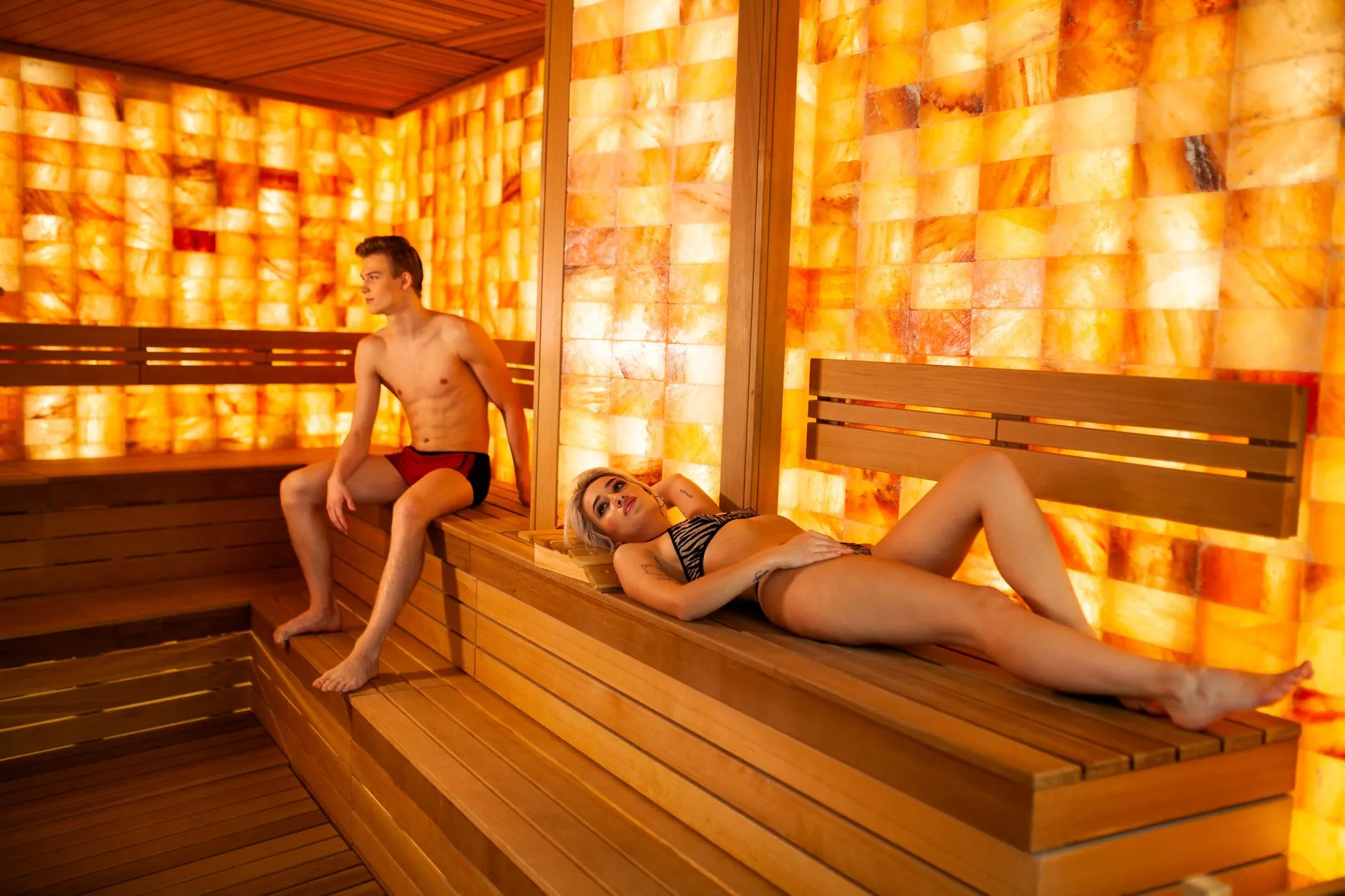 Photo by Sergey Torbik on Pexels — a salt-wall sauna room (stock photo, not a Korean venue); jjimjilbang salt kilns look similar but you’ll be in a cotton uniform, not swimwear
Are Korean bathhouses sanitary?
Head-on, because it is a question people type into search engines: yes, the baths are regulated, and no, that does not make every venue spotless. Both halves matter.
The regulation half. Bathhouses in Korea are a licensed “public hygiene” business, and the rules are specific. A bathhouse must have a bathing room with tubs and showers, a changing room, and a sweating room, with the changing and bathing rooms run separately for men and women, and the tub water must pass through a chlorine, ozone, or UV sterilizing unit before the filter. Where tub water is recirculated, operators must measure its temperature and free residual chlorine at least once a week and log it (or log a full water change instead); they must have the bath water tested at least once a year, including a Legionella test by an accredited lab; towels and gowns handed to customers must be freshly laundered; the bathing room must be disinfected at least monthly and changing rooms and toilets cleaned daily.
Why Legionella specifically? Korea’s disease-control agency lists aerosol-generating water systems — cooling towers, showers and taps, hot springs — as the sources of Legionnaires’ disease, spread by inhaling droplets of contaminated water; there is no reported person-to-person transmission. That is exactly the risk profile of a warm, humid bathhouse, which is why the annual test exists.
The honest half. Both the English and Korean Wikipedia entries note that some jjimjilbang have had their sanitary condition questioned — facilities, the shared uniforms, and the food — and the Korean entry is blunt that 24-hour operation, high humidity, and clothes worn by many people are the weak points, and that small, old neighborhood venues can be badly neglected while newer branded complexes are generally kept up. Its practical advice is mine too: check recent Naver or Google reviews before you pick a place. The regulations set a floor; the reviews tell you who is standing on it.
My own rule of thumb: the changing-room floor and the lockers should look clean on sight, and in the bath area itself, less yellow mineral staining on the floor tiles can be a sign the place is cleaned carefully.
Can you go to a jjimjilbang with tattoos?
Two separate things are true at once.
The perception. Through the 20th century, tattoos in Korea became associated with gangs, and that association lingers in the older generation. The language itself splits: the loanword tatu (타투) reads as fashion or beauty, while the native word munsin (문신) still carries a whiff of violence and punishment. Attitudes have shifted a lot — in a 1983 survey, 72.6 % of respondents had never encountered a tattooed person; by 2007, 67 % had — and younger Koreans are far more relaxed about it.
The law, which is changing fast. Since a 1992 Supreme Court ruling, tattooing was legally a medical procedure that only licensed doctors could perform. On September 25, 2025, the National Assembly passed the Tattooist Act (195 in favor, 7 abstentions, of 202 present), which licenses non-medical tattooists via a national exam and takes effect two years after promulgation; then on May 21, 2026, the Supreme Court itself overturned the 1992 precedent, ruling that ordinary tattooing by non-doctors is not unlicensed medical practice. None of this ever made having a tattoo illegal — it was always about who could do the inking.
What that means at the door: there is no national rule about tattooed customers; each venue sets its own policy, and it genuinely varies. Korean papers have reported since 2024 that “no-tattoo zones” are spreading across bathhouses, gyms, pools and hotels — but the cases they actually name are five-star hotels’ pools and fitness areas (Fairmont Ambassador bars tattoos over 15 cm at its pool) and a Gangnam gym, not bathhouses, so I cannot tell you how often a jjimjilbang turns someone away. For what it is worth, when Han River pool users demanded tattoo limits in summer 2026, Seoul city said it would be hard to restrict a public facility on tattoos alone. If you are heavily inked, message the venue or check its reviews first.
What should you bring, and what does it cost?
Provided: the uniform (T-shirt and shorts) and towels come with your locker key; sleeping zones usually have floor cushions, blankets, and pillows — the pillows are typically hard wooden blocks or leather, since fabric ones are avoided for hygiene reasons.
Bring or buy on site: what is stocked free varies by venue. One that publishes its list — Spa at Home at Incheon Airport Terminal 2 — puts two towels per person plus shampoo, conditioner, body wash, toothpaste, body lotion, facial toner, cotton swabs and hair dryers in the sauna for free, rents a sleeping blanket for ₩4,000, and sells toothbrushes, razors and eye masks at the counter — so a toothbrush and a razor are the safe things to pack. The one thing worth carrying is an Italy towel (이태리타월), the green exfoliating mitt invented in Busan in 1967 and named for the Italian viscose it was first made from; it is a staple of Korean bathrooms and saunas. Professional scrub staff recommend using it no more than once a week to avoid skin damage.
Pricing structure. The two Incheon Airport operators, which publish price boards online, split the rate into a daytime band and a pricier nighttime band that starts at 8 pm, sell it in time blocks (up to 6 hours, 6–12 hours) and add ₩5,000 for every hour you overrun; extras such as scrubs, massages and food are separate — you charge them to the locker-key wristband and settle the total at the counter when you hand the key back. Downtown Seoul venues can work differently. Sparex Dongmyo, in Jongno-gu, posts its rates on its own Instagram account: entry from 5 am–8 pm costs ₩14,000, entry from 8 pm–5 am costs ₩16,000 — the same 8 pm day/night split as the airport — but there are no time blocks. One payment buys a flat 24 hours from the moment you enter, and overstaying costs one additional full day’s admission rather than an hourly fee. The concrete numbers from the official listings and price boards available:
| Venue | Day | Night | Notes |
|---|---|---|---|
| Spa at Home, Incheon Airport T1 (still “Spa On Air” on KTO and Incheon city pages) | Shower only, 2 h: ₩12,000; spa & rest with 8 am–8 pm entry: up to 6 h ₩22,000 / 6–12 h ₩28,000 | 8 pm–8 am entry: up to 6 h ₩28,000 / 6–12 h ₩38,000 | Open 24 h; overtime ₩5,000 per hour; operator’s board dated Jan 2026 — the KTO listing still shows the older ₩10,000 / 20,000 / 25,000 rates |
| Spa at Home, Incheon Airport T2 | Shower only, 2 h: ₩12,000; shower & sleep with 6 am–8 pm entry: 6 h ₩22,000 / 12 h ₩28,000 | 8 pm–6 am entry: 6 h ₩28,000 / 12 h ₩38,000 | Open 24/7; overtime ₩5,000 per hour; no reservations, entry may be refused when full |
| Spa Lei (Sinsa, women-only) | ₩22,000 | ₩22,000 (single listed admission) | Open 24 h, maintenance Tue 9–10 am |
| Sparex Dongmyo (Jongno-gu; same chain as Sparex Good Morning City below, different branch) | ₩14,000 (5 am–8 pm entry) | ₩16,000 (8 pm–5 am entry) | Flat 24-hour stay from entry time; overrunning costs one additional full day’s admission, not an hourly fee; 3 hours free parking |
Can you actually sleep overnight in a jjimjilbang?
Yes — this is one of the original functions, not a tourist hack. Some jjimjilbang explicitly allow overnight stays, and Korean men who work away from home or stayed out late have long used them as a crash pad. Sleeping zones are either one big open floor or rows of partitioned cubicles, and because strangers share them, many venues split the sleeping area into men’s and women’s sections.
The money case is real. Seoul-area hotel rates hit a record average of nearly ₩296,000 a night in September 2025, up 14.6 % year on year according to STR data, with mid-range hotels rising fastest. Against that, an overnight entry at the venues in the table above runs from ₩16,000 (Sparex Dongmyo’s night-band admission) to ₩38,000 (Spa at Home, 12-hour night entry) — roughly a twentieth to an eighth of that hotel average.
The honest reality check: you are sleeping on a mat on a heated floor, in a room with lights that never fully go off, next to strangers who snore, with a wooden block for a pillow, and your bag is in a locker rather than beside you. It is fine for one night, a red-eye layover, or a missed last train; it is not a hotel substitute for a week. On the nights I’ve actually stayed over, I arrived in the evening, had a quick bath, then moved to the sleeping room — where there were plenty of snoring men that night — and slept using the mat and pillow the venue provides.
Related: if the reason you are there is that the subway stopped, the last-train and night-bus section of my Seoul subway guide covers how to check the last departure and what runs after it.
What do you eat at a jjimjilbang? The egg-and-sikhye ritual
The snack bar is part of the experience, and two items are non-negotiable.
Maekbanseok gyeran (맥반석 계란) are eggs smoke-baked on maekbanseok (elvan stone) rather than boiled; the counter sells them with a tiny paper packet of salt. Sikhye (식혜) is the drink beside them: a traditional sweet rice beverage made by steeping cooked rice in malt water, with the soft rice grains left floating in it — no sugar is added, the malt does the work. The snack bar keeps sikhye and other drinks (plum, pomegranate, green tea) in ice-filled tubs with blue lids, and canned sikhye from the convenience store is the same thing with the rice sunk to the bottom.
The eggs are the smoky, chewy counterpoint to the ice-cold sweetness of the drink after a kiln session; the folk wisdom is that it “restores what you sweated out” — folk wisdom, not medicine — but the combination is half the reason people go. Restaurants inside sell proper meals too — mostly Korean staples and snack-shop food (bunsik), sometimes udon or jajangmyeon (black-bean noodles).
Ramyeon is another common order alongside the eggs and sikhye. The eggs come in a set portion when you ask rather than something you count out yourself, and the sikhye sometimes arrives in a plastic bottle rather than a can — either way, asking the counter for “egg and sikhye” is enough; they know what that means.
How do you fold the sheep-head towel (yangmeori)?
The rolled-horn towel hat — yangmeori (양머리, “sheep head”) — is the jjimjilbang look you have seen in K-drama sauna scenes, and it turns up in Korean celebrities’ own sauna photos too. There is a practical side — it keeps the towel from slipping — but I think people mostly do it because it looks cute; the trend has faded these days and it’s not something you see often anymore.
The fold, step by step, using the small towel you were given.
- Lay the towel flat and fold it lengthwise into thirds, so you have one long, narrow strip.
- Starting from one short end, roll the strip tightly toward the middle. Stop at the center.
- Roll the other short end in the same way until the two rolls meet in the middle.
- Now open the towel from the center: pull the two layers apart so the middle becomes a cap, with the two rolls left sticking out as “horns.”
- Put the cap on with the horns above your ears. If the horns unroll, your first fold was too loose — redo step 1 tighter.
Men’s side vs women’s side: what’s different, and what is seshin?
Structurally the two sides mirror each other — the law requires the changing and bathing rooms to be run separately for men and women, and it is the same tubs, showers, and sauna rooms on both sides. What differs is mostly atmosphere and services. One difference from the women’s side, as told to me by a female acquaintance: towel use may be capped at a set number, and running a hair dryer can come with an extra charge.
Seshin (세신, body scrub) is the service most worth paying for once. The scrubber — a ttaemiri (때밀이) or seshinsa (세신사), a recognized profession in Korean bathhouses — works on the bathing floor, so it is always someone of your own gender. You lie naked on a waterproof table while they go over your entire body with an exfoliating mitt, and the grey rolls of dead skin that come off are a rite of passage. It is vigorous, not gentle; think of it as maintenance, not a spa massage.
How it works in practice: at an ordinary public bathhouse a scrub ran ₩20,000–30,000 when the business daily Edaily surveyed the market in February 2023, against ₩80,000–110,000 at the newer one-person seshin shops — treat both figures as three years old.
In practice: soak in the hot tub until your skin has softened, then find the seshinsa, who may be working in the scrub area itself or waiting near the lobby. Ask for a scrub — if they’re already with someone, they’ll tell you the wait; if not, they can start right away. Stay submerged up to your neck rather than just your legs, and if it starts to hurt during the scrub, say so — they’ll ease off. Afterward they rinse you down and leave a layer of soapy water on your skin, so the last step is walking over to the shower area to rinse that off yourself.
Which jjimjilbang should a first-timer pick? (Seoul and Incheon Airport)
I only list venues I could confirm from an official source (Visit Seoul, the Korea Tourism Organization, Incheon city or the operator itself), and one warning belongs at the top: Dragon Hill Spa in Yongsan, still recommended on many English blogs, is listed as closed on the Korea Tourism Organization’s site. Do not build a plan around it.
| Venue | Where | Hours | Price | Why for a first-timer |
|---|---|---|---|---|
| Spa at Home (Terminal 1; “Spa On Air” on KTO and Incheon city pages) | Incheon Airport T1, east end of the public area on B1 (landside) | 00:00–24:00 (break 23:30–00:00) | Shower 2 h ₩12,000; day 6 h ₩22,000 / 12 h ₩28,000; night 6 h ₩28,000 / 12 h ₩38,000 | Opened Dec 2018 as the first sauna inside an airport; sauna, open-air bath, pool, steam bath, sleeping room; one bag per person stored free — the layover option |
| Spa at Home (Terminal 2) | Incheon Airport T2, west side of B1 | 24 h, no holidays | Shower 2 h ₩12,000; day 6 h ₩22,000 / 12 h ₩28,000; night 6 h ₩28,000 / 12 h ₩38,000 | Same brand at T2, run by Sean Hotel Group; grand-opened late January 2025 with changing room, sauna, showers and men’s, women’s and family sleeping zones; no reservations, first come first served |
| Spa Lei | Seocho-gu, Sinsa Station (Line 3) Exit 5, ~280 m | 24 h (maintenance Tue 9–10 am) | ₩22,000 | Women-only, so the entire place is one gender — the answer for women who want the baths without a mixed hall |
| Sparex Good Morning City | Good Morning City mall, B3, Jung-gu (Dongdaemun); Dongdaemun History & Culture Park Station, Exit 13 or 14, per the venue’s own Instagram | 24 h, year-round | The Dongdaemun Fashion Town Special Tourist Zone association lists it as a 24-hour sauna pitched as an “urban water park” — the round-the-clock option in the shopping district, but confirm prices at the door |
Two airport notes. First, the name: the airport’s own facilities directory and the operator’s site now call the Terminal 1 spa “Spa at Home” (same phone number as before), while the Korea Tourism Organization and Incheon city listings still say “Spa On Air” — both mean the same B1 spa. Second, for a layover: the airport lists it in the east of the public area on B1 of Terminal 1, which means landside — arriving passengers clear immigration and customs first, and departing passengers use it before check-in and security. The Terminal 2 branch is likewise on B1, west side.
Final tips before you go
Hydrate between kilns. The hottest rooms are hot; ten minutes and out is plenty until you know your tolerance.
Keep your voice down in the baths. In my experience the hall stays generally quiet, and quieter still once the lights are dimmed for the night to help people sleep; loud talking in the bath area itself is rare, though kids do get noisy there sometimes.
Cash or card? Extras are not paid piecemeal: the locker key on your wrist or ankle doubles as your tab for the snack bar, massage chairs and the like, and you settle everything at the counter when you return it. Card acceptance varies by venue — Sparex Dongmyo’s own Instagram notice, for instance, confirms credit, check and prepaid cards are all fine there — so don’t assume every jjimjilbang takes cards without checking.
Getting home late. Jjimjilbang hours are the reason they pair so well with a missed last train — but if you would rather sleep in your own bed, check the last-departure and night-bus notes in the Seoul subway guide before the tubs make you drowsy.
Go once, and for most first-timers the anxiety fades fast. It is not an attraction; it is where Koreans go to stop thinking for a few hours, and you are welcome to do the same.