Korea Autumn Foliage 2026: Seoraksan to Naejangsan Timeline
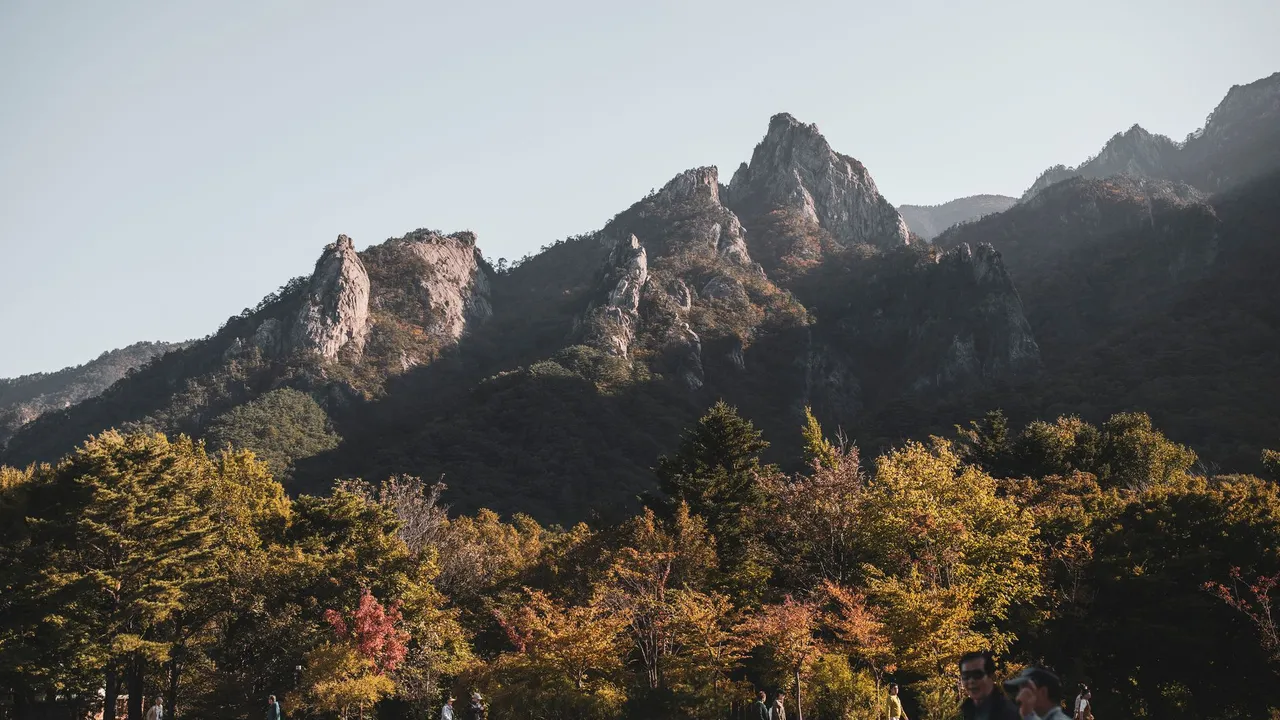
Photo by 정규송 Nui MALAMA on Pexels
Korea’s autumn color doesn’t arrive all at once — it starts on the high ridgelines of Seoraksan in the northeast and takes two to three weeks to work its way down to Naejangsan in the southwest, with Seoul catching peak color somewhere in the middle. If you’re planning a 2026 trip around leaf-peeping, here’s how that timeline actually works, what the official forecasts say (and don’t say yet), and the access and parking reality at the two mountains many visitors try to visit on the same two weekends.
When Is Peak Foliage in Korea? The North-to-South Timeline
Korean forecasters track two milestones for every mountain: first foliage, and peak foliage — officially defined as the point when roughly 80% of the mountain has changed color.
The color front then moves south, starting on Seoraksan’s upper elevations and reaching the far southwest — Naejangsan and beyond — several weeks later, with Seoul’s mountains and palace gardens peaking somewhere in between. To make that concrete, here’s how the order played out in the Korea Meteorological Administration’s official 2024 peak-foliage forecast, published via the government’s Korea.kr portal:
| Location | Order | 2024 peak date (illustration only) |
|---|---|---|
| Seoraksan (Gangwon, northeast) | 1st | October 20 |
| Bukhansan / Seoul area | 2nd | October 28 |
| Naejangsan (Jeollabuk-do, southwest) | Last | November 5 |
That’s one specific year, not a promise for 2026 — exact dates shift with the weather every year, which is why the next section points you to the live forecast instead of a fixed calendar. But the order and the rough spacing (about a week between each stop) hold up in the two years of data we could confirm (2023 and 2024): Seoraksan first, Seoul in the middle of the run, Naejangsan among the last of the major named spots to turn — though a single unusually warm or cold snap could compress or stretch that gap.
What Does the 2026 Forecast Say?
Korea doesn’t have one single official foliage authority — three public sources between them cover it, and none of them lock in exact dates this far ahead:
- Korea Forest Service (산림청) builds an annual foliage-front prediction map from bio-observation data collected at the National Arboretum and regional public arboretums, cross-referenced with mountain weather data. It’s typically released in September.
- Korea Meteorological Administration (KMA) runs a live foliage-status tracker for named mountains at weather.go.kr — it goes active once the season starts and updates through autumn, rather than posting one static forecast.
- Visit Korea (Korea Tourism Organization) republishes an English-language Fall Foliage Forecast page each year with region-by-region estimates.
We’re not hardcoding this year’s exact dates here on purpose — by the time you’re reading this, they may already be out of date. Check the links above closer to your travel dates for the current numbers.
One honest caveat on timing: the Forest Service’s own long-term analysis (tracking data from 2009 onward) found that peak foliage has been trending roughly 0.33 days later per year, largely attributed to warmer summer and early-autumn temperatures.
That’s a slow multi-year drift, not a guarantee about any single year — but it’s part of why September forecasts are a starting point, not a lock. If a given September and October run warmer than average, that same trend suggests the schedule can slide later than usual. Don’t book non-refundable everything around a single projected date; build in a few flexible days if you can.
Seoraksan: Korea’s First Peak
Seoraksan is Korea’s earliest major peak, with color reaching the upper ridgelines well before the rest of the country. In two different official/government-sourced forecasts (2023 and 2024), Seoraksan’s peak fell in the October 20–23 window — again, an illustration of when in the calendar this mountain usually goes, not a 2026 prediction.
Getting there from Seoul. Two practical routes:
| Route | How | Notes |
|---|---|---|
| Train + bus | Gyeonggang Line train from Cheongnyangni to Gangneung (237.7 km), then an intercity bus on to Sokcho | Travel time and fare depend on the specific departure and change with each timetable update — check current train times and fares on letskorail.com and the Gangneung–Sokcho intercity bus schedule on kobus.co.kr before booking. |
| Direct intercity bus | Dong Seoul Terminal or Seoul Express Bus Terminal → Sokcho Terminal | Both terminals run service to Sokcho. |
From Sokcho, city bus routes 7 and 7-1 run to Seorak-dong/Sogongwon, the main park entrance.
Parking and shuttle reality. Sogongwon’s lot is the closest to the cable car and fills fast on autumn weekends. Official parking rates are higher in peak season than the rest of the year: small vehicles run ₩4,000 (day) / ₩8,000 (overnight) in low season versus ₩5,000 (day) / ₩10,000 (overnight) in peak season, with large vehicles at ₩6,000 (day) / ₩12,000 (overnight) in low season versus ₩7,500 (day) / ₩15,000 (overnight) in peak season.
In recent autumn foliage seasons, Sokcho authorities have run weekend/holiday traffic control once the Sogongwon lot fills, directing overflow to the Seorak-dong B/C-district lot and operating a free shuttle bus between that lot and Sogongwon — worth knowing about even though the exact operating dates change year to year.
The practical takeaway: on a peak-week weekend, arrive early, or plan on the park-and-ride shuttle rather than counting on street-level parking at Sogongwon itself.
Naejangsan: The Color Front’s Last Stop
Naejangsan, in Jeollabuk-do’s southwest, is among the last of Korea’s major named foliage destinations to peak — in the government’s 2024 forecast it topped out on November 5, about two weeks after Seoraksan and roughly a week after Seoul.
A separate Forest Service forecast put Naejangsan’s peak around October 29, a week or so behind Seoraksan that same year — the exact gap moves year to year, but Naejangsan consistently lands well after Seoraksan and after Seoul’s own peak.
Getting there from Seoul. Take a Honam Line KTX from Yongsan Station toward Gwangju/Mokpo and get off at Jeongeup Station, which sits directly on the line.
If you’d rather bus the whole way, Central City Terminal in Seoul runs service toward Jeollabuk-do destinations including Jeongeup.
Parking and shuttle reality. Official parking fees at Naejangsan are tiered: ₩2,000 for small vehicles, ₩4,000–5,000 for mid-size, ₩6,000–7,500 for large — and parking is free if you’re riding the park’s regular shuttle bus.
During autumn foliage season, Jeongeup city has run a free shuttle bus between the Naejangho parking lot and Wollyeong Bridge (about 2.1 km) to cut congestion at the park entrance, typically operating from around 9 a.m. to 5 p.m. with earlier 8 a.m. starts on the busiest peak-week days — exact dates and hours are set fresh each year, so treat this as the pattern rather than a fixed schedule.
Same practical advice as Seoraksan: park at the outer lot, ride the shuttle in, and expect the closest-in parking to go first on peak-week weekends.
Nami Island: A Car-Free Foliage Day Trip
If you don’t want to deal with a rental car or a long intercity bus ride, Nami Island (an hour or so from Seoul by train) is a foliage day trip that’s entirely doable by public transport — the island itself is famous for its metasequoia and ginkgo-lined paths that turn gold in autumn.
Getting there. Take the ITX-Cheongchun train from Yongsan Station or Cheongnyangni Station to Gapyeong Station, then either walk (about 30 minutes) or take a short taxi ride to the ferry dock. An intercity bus from Dong Seoul Terminal to Gapyeong Terminal is also an option, followed by a taxi or local bus to the dock. Direct round-trip shuttle buses from spots like Hongik University Station also run to the island dock, though the operator and timetable change often enough that it’s worth checking when you book rather than assuming last year’s schedule still holds — having Naver Map or KakaoMap set up in English makes finding the right pickup point much easier.
From the dock, the island itself is only reachable by ferry (or zip wire) — there’s no bridge or road access, which is exactly what keeps it car-free.
The island has also extended ferry operating hours in past autumn seasons to handle foliage crowds, so check the current schedule before you plan your last crossing back.
Short on Time? Foliage Spots Inside Seoul
If a day trip isn’t in the cards, Seoul has its own foliage worth seeing without leaving the city:
- Seoul Forest (Seongsu-dong) — metasequoia and ginkgo trees turn gold here, a short walk from Seoul Forest Station.
- Changdeokgung Palace’s Secret Garden (Huwon) — officially, autumn is billed as the garden’s best season, “when the autumn foliage is at its peak and the leaves have just started to fall.” Entry is guided-tour-only with limited capacity (100 people per session, split between online reservation and on-site ticketing), so book online at least three days ahead — this is a year-round rule for this guided-tour-only garden, not just during peak foliage weeks.
- Namsan — the cable car up to N Seoul Tower operates year-round, daily from 10:00 a.m. to 11:00 p.m., and gives you a citywide view over the same hillsides that are changing color across Seoul at the same time; admission to the park itself is free.
None of these need a car, a parking plan, or an early-morning departure — useful if your trip doesn’t have a spare day for Seoraksan or Naejangsan.
Check Live Status Before You Go
Everything above about this year’s exact dates should be treated as a placeholder for one thing: the actual, current forecast. Bookmark the Korea Meteorological Administration’s live foliage tracker and the Visit Korea Fall Foliage Forecast page, and check them again in the two weeks before you travel — both are rebuilt each autumn rather than reused, so whatever they show will be current, unlike a date printed in a blog post months in advance. If a warm September or October is in the forecast, assume the whole color front is running late and build slack into your itinerary rather than locking hotel and transport bookings to a single date.